Physical Address
304 North Cardinal St.
Dorchester Center, MA 02124
Physical Address
304 North Cardinal St.
Dorchester Center, MA 02124


Learn how PageRank’s link-based algorithm shapes Google rankings and why backlinks and internal links still matter.
Some ideas are so simple, they change everything. When I first read about how Google used links to figure out which web pages really counted, it was almost like a magic trick. Pages recommending each other? That felt surprisingly fair. Today, people talk about user experience, content, and intent, but the web’s blueprint still has the echoes of that very first idea: connect things through trust, and you find what matters.
So, how does that magic still shape what shows up when you search, and what should website owners do as the rules keep shifting? Let me walk you through the heart of it, as clear and simply as I can.
Back in the late 1990s, when search engines were mostly lists and keyword matches, Google’s founders wanted to do something smarter. They noticed that academic papers gathered status through citations from other research—so why not treat web links the same way? It was a clever leap and sparked what became known as PageRank.
PageRank is a scoring method created by Google to measure the value and reputation of a web page based on its links from other pages.
Larry Page (yes, that’s the name origin) and Sergey Brin built this system at Stanford to solve a problem: there was simply too much stuff online, and keyword stuffing was making it harder to find the real gems. Their idea? Sites linked out because they found something worth recommending. If a trusted website linked to another one, that “trust” would pass along.
Links are digital votes of confidence.
PageRank, at its core, is both simple and wildly influential.
The calculations behind the scenes can sound intimidating if you’ve ever peeked at the formulas. I remember first staring at the equation and thinking, “Do I really need to understand all that math?” Thankfully, only the principles matter for those of us working on websites. Here’s how the process unfolds:
But there’s a twist: if you only counted links, everything would eventually point in too many directions, and the numbers could spin out of control or settle in odd loops. So Google needed a “slight chance to go anywhere” built in, which is called the damping factor.
Think of it as the likelihood a random surfer will stop following links and jump to a new website altogether. The typical value, around 0.85, means there’s an 85% chance the next click follows a link, and a 15% chance to visit a random spot. This keeps the PageRank flow under control and mirrors real-world behavior.
Studies listed in PubMed highlight how even small changes to this factor can cause wild swings in rankings. That tells me how delicate and tuned the early Google recipe had to be—one tweak, and results could change overnight.
So, to wrap that up: PageRank is a mix of the number of inbound links, their quality, and a curveball of randomness.
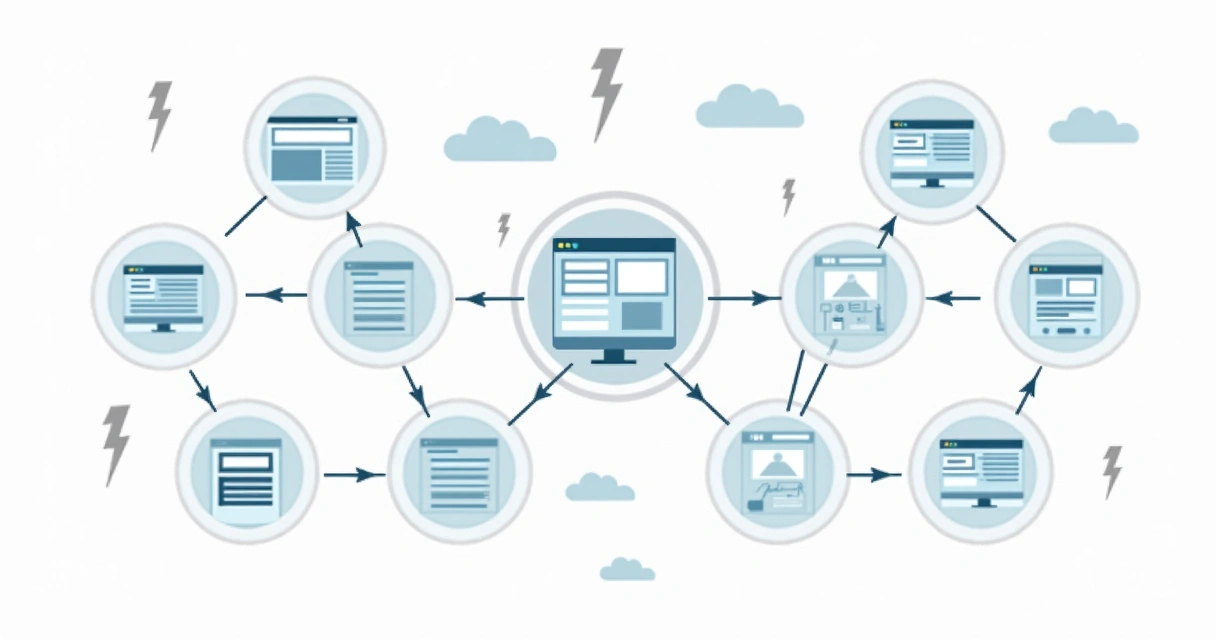
Let’s get practical—I’ve seen countless website owners obsess over keywords, only to forget about links. But think back to the days of academic papers or even customer referrals in the real world. Recognition from respected sources always means more.
Backlinks are links from external sites to your pages, acting as endorsements that can signal real value and trust to search engines.
Backlinks, especially from strong websites, serve two purposes:
The Best SEO often features success stories of how even a handful of reputable links can transform a forgotten blog into a front-page hit.
But in my view, not every backlink is worth chasing. Quality always tops quantity. A few links from relevant, established websites are far more effective than dozens from generic, off-topic, or spammy places.
At first, all backlinks felt the same. As algorithms grew up, they could compute how healthy, relevant, and trustworthy the source was. That’s why buying links or joining link farms fizzled out as a shortcut. The game shifted; earning links—not just collecting—became key.

There’s also a powerful side effect—traffic. Visitors coming through these recommendations stick around longer, engage more, and give search engines even more positive signals.
If backlinks are the outside fan club, internal links are the way you organize your house. I noticed, over years of experiments, that fixing up the links between my own articles sometimes brought larger jumps in traffic than chasing one-off external links.
Internal links guide both users and search engines, spreading reputation throughout a website and helping highlight your key pages.
Think of your homepage as a river source; the links coming from it flow PageRank to other places. If a new landing page matters, make sure it’s just a click away from the site’s main spots.
On The Best SEO, I often recommend creating natural pathways between related posts, like linking an article on Google ranking factors to guides in the website optimization or SEO basics sections. These steps may sound small, but the results can be fast and measurable.
A strange thing happened as link building took off. People became obsessed with chasing visible scores, sometimes paying for links or finding loopholes. That led Google to pull the public PageRank score from its toolbar in 2016.
But here’s an open secret: even though the score isn’t published anymore, the logic behind it still shapes Google’s view of your website.
Webmasters now focus on authority scores, trust metrics, and signals from real user engagement. But, scratch the surface, and you’ll see most of them reflect PageRank’s original DNA—how links flow, what gets shared, and where visitors go.
Some of the most interesting academic research keeps proving PageRank’s strength beyond just websites. In one study of biomedical articles, for example, researchers found a very strong link between PageRank value and how often a paper was cited. To me, that’s proof of its broad value in measuring reputation, whether online or in academia.
With all the talk about new signals and AI-powered search, I hear a few myths repeated daily. Let’s clear up a few:
As far back as I can remember in SEO, Google’s algorithm has gradually grown up. Over the years, it now considers things like relevance, context, and intent. But the roots of it all—how authority and trust move from site to site—haven’t changed as much as you’d think.
In fact, some modern authority scoring systems combine citation popularity and reputation to build balanced metrics. For instance, the PR-index merges how many people cite an author with how important those linking sources are, broadening PageRank’s reach to people as well as web pages.
But time brings its own challenges. A study on growing networks pointed out that a basic PageRank calculation might miss important new pages if it isn’t updated often enough. That’s why, nowadays, Google refreshes scores frequently—to spot new, valuable resources before they get lost in old math.
Through all these tweaks, the goal has stayed steady: reward useful connections, and let the cream rise to the top.
I’ve spent years testing (and sometimes failing with) strategies to boost a page’s reputation. While there are always new tricks on the horizon, the timeless habits seem to hold:
Building up your link reputation is about being helpful and visible—not just dropping your URL in as many places as possible.
Because the public PageRank numbers are gone, new ways of estimating a website’s status have emerged. On The Best SEO, I often refer to authority scores, trust values, and relevance metrics, which are all built on top of what PageRank started.
The field continues to grow. More studies, like those available from academic research on ranking scientific papers, show that networks, reputation, and endorsement still work together.
If you’re new to all this, I recommend focusing on two steps: make content worth linking to, and make it easy for people to discover (inside and outside your website).
Over the years, hundreds of site audits and experiments have given me a set of practical habits. These aren’t secrets—they’re just steady work that keeps paying off.
All these actions work together. They’re not glamorous, but search engines pick up on consistency, clarity, and connections far more reliably than quick fixes.
To discover more strategies tailored for growth, browse through related guides in the Google ranking and digital marketing sections on The Best SEO.
I’ve watched new algorithms and flashy ranking signals come and go. Social likes, engagement signals, AI-powered content—they all matter, but the backbone remains: who trusts you, and who refers to you? That’s the DNA of how Google works.
Trust and relevance never go out of style.
So, if you’re looking for the most dependable way to strengthen your place in Google’s world, work on meaningful connections, deepen your web of helpful links, and stay true to what people want to read and share. That’s as true now as it was when Larry Page scribbled out the first version of his idea.
For anyone growing a website, whether you’re just starting or already well established, adapting to these foundational ideas is one of the savviest choices you can make. And when you want guidance, tools that make ranking simpler, or just a fresh perspective, you’ll find plenty of help along the way at The Best SEO.
If you’re ready to move your site higher in the search results and see how a strategic approach can change your traffic, explore the solutions and resources offered through The Best SEO. You can always search for topics or ask questions in our archive and search section—you’ll be surprised at how much there is to learn, whatever your experience level.
PageRank is a mathematical formula used by Google to estimate how important a web page is, based on how many other pages link to it and the reputation of those sources. In practice, this means that if your site receives a lot of links from significant and trusted sites, your pages become more likely to rank higher in search results. It works a bit like measuring popularity and trust through recommendations.
Improving your site’s ranking score starts with attracting high-quality links from other reputable websites. You can also boost your site by building strong internal links, regularly updating your most valuable pages, and avoiding spammy or low-quality links that could harm your reputation. Focus on sharing useful content that others want to reference or discuss, and make sure people discover your most important pages easily.
Yes, the principles behind PageRank are still quite significant. Even though Google no longer displays the public PageRank score, the underlying idea—using links as measures of trust, authority, and relevance—remains central in sorting search results. Good link profiles and helpful internal linking are still vital parts of search engine strategy today.
While Google no longer shows PageRank scores in its toolbar, it continues to use the basic principles within its core algorithm to help organize and rank search results. Other factors like content quality and user experience also matter, but quality links are still a key part of the process.
Pages with higher calculated authority from trustworthy links are more likely to show up at the top of Google’s search results. Link reputation remains one of the strongest indirect signals guiding what users see, even as new ranking factors get added into the mix. That’s why website owners who focus on solid connections and clear site structure tend to see better long-term results.